Gear & Suits
Breathedge 2 Gear, Suits & Backpacks: Every Slot, How to Upgrade, and What to Carry
Your survival in Breathedge 2 is defined by what you're wearing as much as what you're carrying. Seven equipment slots turn raw materials into the ability to go farther, stay out longer, and survive the cold. This page lists every gear slot confirmed in the launch build, what each one does, how to upgrade your suit, and why the backpack and the booster deserve more attention than they get. The gear list reflects the Early Access build (Chapter 1), and more gear arrives with later updates.
- 7
- equipment slots
- 1st
- upgrade the backpack
- 0
- vehicles in launch
Looking for the backpack? It's the upgrade that fixes "inventory full." To unlock it, place the Painted Corpse next to the locked box (the corpse is in a wrecked ship in the police-station area); the recipe is Aluminum x4, Plastic x2, Titanium x4, Electric Tape x4. Capacity then goes further with the Backpack Capacious (+30) and Leather Backpack Capacious (+35) upgrades. Full details in the backpack guide.
Three rules
How Gear Works
Before the slot-by-slot breakdown, three rules explain the whole system:
Seven wearable slots.
The inventory shows seven equipment positions — spacesuit, helmet or visor, oxygen tank, gas tank, gloves, flashlight, and backpack. What you put in each one changes your stats in the status bar.
Gear moves your stats.
Health, armor, cold and heat resistance, and radiation protection all come from what you wear, not from the character. Upgrade the gear and the numbers move.
Everything upgrades at the workbench.
Suit and gear upgrades are made at the workbench or the hub facility, and they're the game's real progression — the same place you craft tools is where you grow your kit.
Two more details run through the whole system: items have weight, and gear has durability. Both matter more than the UI lets on, and both get their own sections below.
Seven slots, seven jobs
Equipment Slots
Seven slots, each with a specific job. Here's what goes in each one and what it does for you.
Spacesuit
The base layerThe spacesuit is the base layer — the thing you're wearing the whole game. It's the mount for your booster, so it's also your movement gear, and it's the slot you upgrade to raise cold resistance. When the frozen sections start killing you, the suit upgrade is the answer, not a consumable.
Helmet / Visor
Environmental protectionThe helmet covers your head and face, and it's the slot tied to environmental protection — the visor is what keeps exposure from eating you alive in hostile conditions. It's less flashy than the suit upgrades, but it's part of the same "survive the environment" equation.
Oxygen Tank
Your air supplyThe oxygen tank is your air supply. It governs how long you can work outside a base or station before the oxygen bar empties, which makes it one of the most practical upgrades in the game: a bigger tank means longer runs, and longer runs mean fewer trips home. If you find yourself constantly cut short by air, the tank is the slot to improve.
Gas Tank
Fuel for the boosterThe gas tank is fuel for your movement gear — the booster that lets you drift and fly in zero-g runs on it. Keeping the tank topped up is part of moving efficiently through the wreckage, and it's why "gas" matters even though there's no vehicle to drive.
Gloves
Handling and protectionGloves sit in their own slot, tied to handling and protection. The launch build doesn't make a show of what they change in minute detail, but they're part of the kit that keeps you functional in harsh environments. Treat them as one of those slots you fill because every slot counts.
Flashlight
Your light sourceThe flashlight is your light source. Wreckage interiors and sealed sections get dark, and a working light is what makes those spaces usable. It's a small slot with a real job: without light, half the map is just black shapes.
Backpack
CapacityThe backpack is capacity — it decides how much you can carry out of a run before you're full. Upgrading it is one of the highest-leverage moves in the game: more capacity means longer scavenging trips, which means fewer dead trips back to base. If you're constantly "inventory full," the backpack is the fix. How to unlock it (find the painted corpse), the exact recipe, and the capacity upgrades are covered in the backpack unlock note at the top of this page.
The core progression
Suit Upgrades
Suit upgrades are the core progression loop for survival. Each upgrade step raises your cold resistance, and higher cold resistance is what unlocks the frozen parts of the map — the exact translation of "survive the cold" into "explore a bigger area." They're crafted at the workbench / hub facility, and they're the upgrade that most directly changes how much of the world you can see.
The diagnostic signal is simple: if you keep freezing in a zone, you don't need a consumable, you need the next suit upgrade.
Temperature is two-sided in the stat bar (cold and heat both tracked), but the first chapter is dominated by the cold side, so suit upgrades focus on cold resistance; heat-related effects are covered on the survival stats page.
Better gear = explore farther
Armor and Environmental Resistance
Beyond the suit, gear as a whole provides armor and environmental resistance.
Armor
The value that absorbs incoming damage before it hits your Health.
Resistance values
Govern how the environment chews on you — cold, heat, and radiation each have their own number in the status bar.
Together
They're the reason "better gear" usually means "survive the environment longer," which is the same thing as "explore farther."
The grid, and what trips you
Backpacks and Inventory
The inventory uses a grid of slots, and everything you pick up takes up space. The backpack sets the size of that grid, and upgrading it expands how much you can hold. Three details are worth knowing before you lose a good run to them:
Capacity is your run length.
A bigger backpack is effectively more time out of base, because you spend less of it shuttling loads back.
Dropping your backpack hurts.
Losing the backpack drops your capacity hard — by about 20 slots in the launch build — and it's the kind of mistake that turns a good expedition into a slow, painful one.
Gear has durability.
Equipment wears down with use, so part of inventory management is knowing what needs replacing before it fails mid-run.
The grid isn't the whole story
Weight System
The inventory shows a weight value on every item, alongside its effect. Weight is what stops the grid from being the whole story — you can't just pack the grid to the edges and fly off; heavy loads are their own problem. The exact breakpoints aren't published, but the pattern is clear: haul a huge load and movement pays for it. Keep the heavy stuff for the return trip, not the outbound sprint.
Your only vehicle
Movement Gear: the Booster
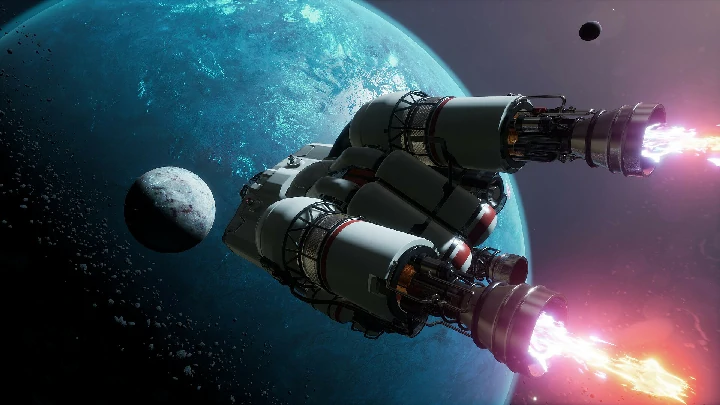
There are no vehicles in the launch build — your spaceship and ground vehicles are on the roadmap, not in the game yet. What moves you through space is the booster on your spacesuit, powered by your gas supply. It gives you zero-g drift and flight, which is how you cross gaps, chase floating loot, and move around the wreckage at all. It's effectively your only "vehicle," so understanding its range and fuel matters more than it sounds.
Who provides, who consumes
Stats and Gear
The status bar's nine values split cleanly between what gear provides and what survival consumes:
GEAR PROVIDES
Armor, Cold resistance, Heat resistance, Radiation protection, and part of your Oxygen supply (tank size).
SURVIVAL CONSUMES
Oxygen, Food, Thirst, Stamina, and Health when things go wrong.
Reading it this way makes upgrade decisions obvious: if a stat is a constant problem, the fix is usually the gear slot that governs it — tank for air, suit for cold, backpack for carrying.
Three traps
Common Mistakes
Ignoring the backpack.
Capacity is run length. If you're always "full" halfway out, the upgrade order starts with the backpack.
Treating the booster like a ship.
It's a suit function, not a vehicle. It moves you in zero-g, and it runs on gas — plan fuel like you'd plan air.
Hunting for a gun.
There are no ranged weapons confirmed in the launch build. Your "weapons" are the tools you build, and combat is secondary anyway.
Keep going
Related Guides
Backpack
The full unlock method (find the painted corpse), recipe, and capacity upgrades — on its own page.
Survival Stats
How gear changes the nine survival stats (oxygen, temperature, carry weight, and more).
Achievements
The stat bonuses achievements grant (cold protection, max oxygen, etc.) stack with gear.
Quick answers
FAQ
- What should I upgrade first?
- The pattern that pays: backpack (longer runs) → suit cold resistance (access to more map) → oxygen tank (even longer runs). If one stat is your constant wall, upgrade the slot that governs it.
- Do I need to worry about weight?
- Yes, but it's a trip-planning concern, not a constant crisis. Keep heavy hauls for the return trip and weight stays manageable.
- Will more gear be added?
- Yes. Early Access, and the devs have said more gear, items, and ways to interact with the world are coming through the 16–20 month window.
The nine status values themselves are explained on the survival stats page.